Welcome to Tangshan Moneide Trading Co., Ltd.






Recommend Products


ups
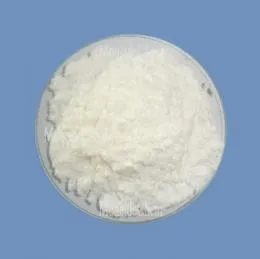
DEP (1‑Diethylamino‑2‑propyne), CAS 4079-68-9 If you’ve spent time in fine-chemicals sourcing, you’ve probably bumped into DEP sooner or later. It’s a small, nimble building block with an alkyne handle and a tertiary amine—two reactive motifs that make process chemists perk up. To be honest, demand has been quietly climbing as teams chase slimmer routes to cationic surfactants, API side chains, and “clickable” polymer modifiers. Origin matters too: MoneideChem (2-7-523 Jidong Building Materials, Tangshan, Hebei 064000, China) ships consistent batches and, in my notebook at least, answers tech emails faster than most distributors. DEP’s main synonym—1‑Diethylamino‑2‑propyne—maps to CAS 4079-68-9 . Some labs shorthand it as “DEP,” others “DEAP.” Same conversation either way. Product snapshot and specs Parameter Typical spec (≈, real-world use may vary) Test method CAS 4079-68-9 COA reference Formula / MW C7H13N / ≈111.18 g·mol‑1 Calculated Appearance Colorless to pale yellow liquid Visual Purity ≥99.0% (GC) GC, in-house SOP Water ≤0.20% Karl Fischer (GB/T 6283) Boiling point ≈118–122 °C at 1 atm Literature/COA Density (20 °C) ≈0.82 g·mL‑1 ASTM D4052 Flash point ≈25–35 °C (closed cup) ASTM D93 Storage / Shelf life Tightly sealed, ≤25 °C; 12–24 months Label/COA Quick process note (how it’s made): most producers couple a propargyl halide with diethylamine under basic conditions (SN2), follow with salt removal, fine filtration, and vacuum fractionation. QC normally covers GC area% purity, KF moisture, and identity by 1H NMR. A recent batch I saw reported 99.4% (GC) and 0.08% H2O—solid for pharma-intermediate work. Where DEP earns its keep Quaternization routes to cationic surfactants, phase‑transfer catalysts, corrosion inhibitors. “Click” or propargylation strategies in medicinal chemistry and agro intermediates. Polymer and surface functionalization via alkyne tagging; then CuAAC for robust linkages. Specialty UV/EB formulations as a tertiary amine co‑component (select systems). Customer feedback? It seems that color stability is good if you keep it dry and out of light; many customers say the material quaternizes cleanly and stores well over a year in lined drums. The odor is typical of short-chain tertiary amines—ventilate and you’re fine. Vendor comparison (abbreviated) Vendor Highlights Lead time Docs Notes MoneideChem (China) Tight GC specs; moisture control; customization ≈7–14 days ex‑works COA, SDS; ISO 9001 QMS stated Origin: Tangshan, Hebei Regional trader Small packs; flexible MOQs Stock‑dependent COA; limited QC details Ask for fresh COA Global distributor Global logistics; compliance support ≈2–4 weeks SDS, REACH notes Higher landed cost Customization and QA Packaging: 1 kg amber bottles, 25 kg drums, or 200 kg lined drums. Options include tighter water spec (≤0.10%), metal content screens, and NMR/GC trace files attached to COA. Compliance sets available on request: ISO 9001 certificate, SDS (GHS), and statements for REACH/transport classification. Case study (concise) A specialty coatings group switched to DEP (CAS 4079-68-9 ) for a cationic additive route. After tuning base equivalents and drying, their quaternization yield rose from 82% to 91% with cleaner GC. Service life of the final additive improved in salt‑spray tests, which—frankly—surprised their QA team but tracked with the tighter amine purity. References: 1. PubChem Compound entry for CAS 4079-68-9 (NIH): https://pubchem.ncbi.nlm.nih.gov 2. ECHA information on tertiary amines and GHS classification: https://echa.europa.eu 3. ISO 9001:2015 Quality management systems—Requirements. 4. ICH Q7 Good Manufacturing Practice Guide for Active Pharmaceutical Ingredients. 5. ASTM D4052 (Density) and ASTM D93 (Flash Point) standard test methods. 6. GB/T 6283 Determination of water—Karl Fischer method.


look at newproducts


